Rust Solo Life at an OP Monument
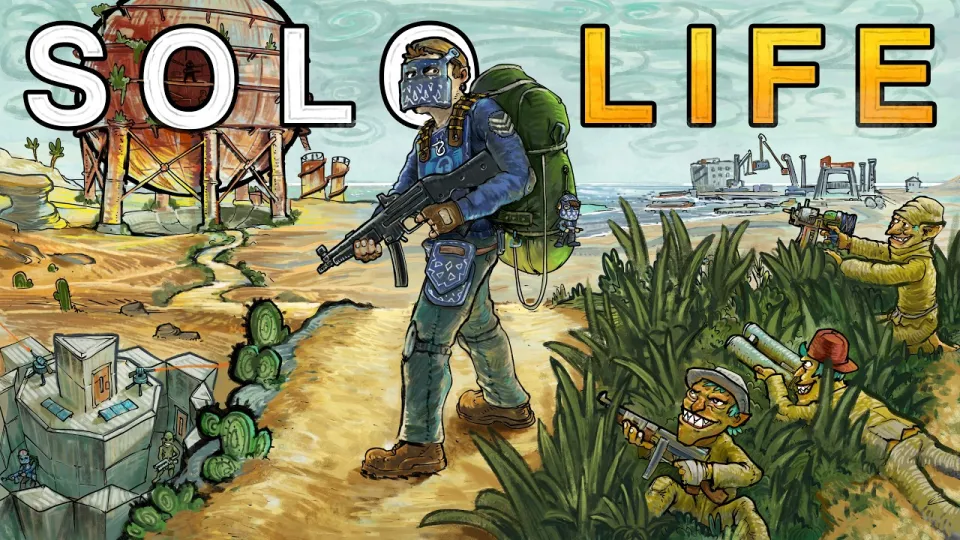
Video: Rust - THE SOLO LIFE V16
Need articles like this for your video? They help promote it on YouTube and Google — order them in the Telegram bot @sat_sit_bot. The bot writes and publishes the articles itself (with your YouTube video embedded) on popular topical websites (no ads). Free trial — 50 articles.
· based on the channel Blooprint
Key takeaways
- Blooprint's Solo Life V16 episode is built around a solo player holding an OP monument while multiple neighbors try to push him out.
- The run is pure solo: no teammates, no clan backup — base building, monument control and raid defense handled by one player.
- Parachutes, the dome and cargo are the episode's mobility and loot anchors, letting a solo move fast between hot spots.
- A friendly neighbor turns into an unexpected ally during a raid defense, one of the most-discussed moments of the episode.
- The episode landed right after the A Solo's Journey series, and the channel confirmed solo videos are now the main focus.
Rust solo play means running every job on a server alone: farming, building, monument control and raid defense, with no teammate to cover a flank. Blooprint's «THE SOLO LIFE V16» shows exactly that loop — one player holding an OP monument while several angry neighbors try to take it from him. Anyone who wants to test the same route can start with the free War Thunder bonus via the sponsor registration link, the same link the video uses.
What the solo life run is actually about
The episode's premise is monument control under pressure: a single player claims a high-value monument, sets up nearby, and then has to defend both the loot flow and the base against a group of neighbors who want the same spot. That setup is the core of Rust solo survival — you rarely fight one enemy, you fight whoever notices you first.
Blooprint frames it as a return to the format rather than a one-off experiment. The Solo Life series is back after the A Solo's Journey arc, and the channel has said solo content is now the priority. For viewers, that means the episode is a template, not a highlight reel: how to pick a monument, how to keep a base small enough to hide, and how to survive when three or four players decide your patch of the map is theirs.
Holding an OP monument as a solo player
Monument control is the most reliable way for a solo to convert time into loot, but it only works if you treat the monument as a route instead of a home. The pattern in the episode follows a few repeatable steps:
- Pick a monument with dense loot and short rotation times, so a single player can clear it and reset before a counter-push arrives.
- Build the base within a short run of the monument, but not on top of it — proximity invites raids, distance costs farming time.
- Keep the base compact: fewer doors, fewer honeycomb layers, cheaper upkeep, easier to reseal after a break-in.
- Use the monument's own cover and verticality instead of open-ground fights, where a solo loses every numbers trade.
- Reset after every fight — a solo cannot afford to stay in a long skirmish with a group that can rotate players back in.
The tension comes from the fact that monument control is visible. Neighbors see the same crates, hear the same gunfire and know exactly where a solo player will be, which is why the episode's fights keep escalating instead of ending.
Movement tricks: parachutes, the dome and cargo
Mobility is the solo player's substitute for numbers, and the episode leans on it hard. Parachutes turn a supply drop or a high climb into a fast reposition, letting one player cross terrain that would otherwise take minutes and expose them to a counter-attack. The dome works the same way: it is a vertical landmark that rewards players who know the climb and punishes anyone chasing blind.
Cargo is the other anchor. A moving loot event gives a solo a legitimate reason to leave the base, and the timing of that trip is the whole skill — arriving late means a group has already set up, arriving early means you are the one holding the angle when they show up. In practice, the episode treats these three elements as a rotation: monument for steady income, dome for height and fights, cargo for the spike in value that a solo base needs to stay competitive.
Raid defense with a friendly neighbor
Raid defense is where the solo life gets genuinely dangerous, because a solo defender has no one to watch the second entrance. The episode's central set piece is an online raid defense in which a friendly neighbor — a player who had been helpful earlier rather than hostile — ends up fighting alongside Blooprint. That alliance is the reason the defense holds, and it is the moment viewers keep coming back to.
The practical lesson is that reputation is a resource in Rust. A solo who greets neighbors, trades instead of shooting first and avoids pointless fights buys something a group cannot craft: someone willing to log in and help when the raid alarm goes off. Two solos with a shared problem can outlast a disorganized group, even if neither of them is individually stronger.
Questions solo players keep asking
Most of the recurring doubts around this style of play come down to the same few points, and they are worth separating from the action itself.
- Is a duo better than staying solo? A duo doubles your coverage and halves your farm time, but it also doubles your footprint and your visibility. The episode shows that a solo can hold a monument; it does not show that a solo can hold it indefinitely without help.
- Why does night footage look so dark? Low-light scenes in Rust are genuinely hard to read, and even night vision does not fix a bad monitor or a bright room. Turning up gamma is the usual fix, though it flattens the image and hurts daytime spotting.
- Is a starter base like the Willjum-style design worth copying? Compact, cheap and quick to reseal — yes, especially when neighbors are already circling. The trade-off is storage and crafting space.
- How much does luck matter? A single eoka shot landing on a geared player can flip an entire fight, and the episode's small moments like that are exactly why solo runs stay watchable: the skill ceiling is high, but the variance is higher.
Useful links
- War Thunder free bonus, PC and consoles: https://wtplay.link/blooprint
- War Thunder free bonus, mobile: https://wtm.game/blooprint
- Blooprint on Twitch: https://www.twitch.tv/blooprint
- Blooprint on Kick: https://kick.com/blooprint
- Blooprint on TikTok: https://www.tiktok.com/@blooprintgames
Final takeaway
Solo Rust is not a weaker version of group play — it is a different discipline built on monument rotations, cheap bases, fast repositioning and a reputation that occasionally turns a neighbor into an ally. The V16 episode packages that into a single run: one player, one monument, several hostile neighbors and one defense that only works because someone chose to help. Blooprint's channel is the author of this breakdown and the place to follow the series as it continues. If you want to support the format, the same free bonus link from the intro is here: grab the War Thunder bonus.
Questions & answers
Can a solo player realistically hold a monument in Rust?
Yes, but as a route rather than a permanent camp. A solo should clear the monument, reset quickly and keep a compact base nearby instead of fighting every group that arrives. The moment you stay in one long fight, numbers start to matter.
Why was the friendly neighbor so important in the raid defense?
A solo defender cannot watch every entrance, so one extra pair of hands changes the entire fight. That neighbor also represents a reputation payoff — being useful to people earlier in the wipe is what makes them show up when the raid alarm sounds.
Do parachutes and cargo matter for a solo base?
They are mobility and value spikes. Parachutes let a solo cross dangerous ground fast, the dome gives vertical control, and cargo gives a reason to leave the base for loot that keeps a small base competitive.
Is it worth running a duo instead of pure solo?
A duo cuts farm time and covers more angles, but it also increases your visibility and upkeep. Pure solo is harder to detect and cheaper to run, which is why many players still prefer it despite the risk.
Source: Rust - THE SOLO LIFE V16 · Markdown version